

When we cook leeks very often we focus on the white part and end up discarding the green part. Actually even the leek leaves are edible and can be used to prepare delicious recipes: crispy chips, broths, stir-fries, pesto and delicious rolls. Learn how not to waste leek leaves and give new life to plant waste, for a Zero Waste kitchen!
Difference between white part and green part of leek
The leek consists of two main parts: the white part, the most widely used, which is more tender, sweet and ideal for short cooking such as risottos, soups and pies, and the green part, which is more fibrous and often discarded because it is considered tough. It is actually edible and rich in flavor.
The key is choosing the right leaves: the harder, damaged exteriors should be discarded, while the softer, inner ones can be used in cooking.
The properties of leeks and why it is important not to throw anything away
Besides being a delicate and tasty vegetable, leeks are also a valuable ally for health. In fact it contains vitamins of group A, C and K, mineral salts such as iron, calcium and potassium, and are rich in fibres that aid digestion.
In particular, the leek leaves are very rich in vitamins (especially A and C), of chlorophyll e natural antioxidants, useful for supporting the immune system and for counteracting free radicals. For this reason, it is important not to discard the green part of the leeks, making the most of it.
Leek is low in calories and high in purifying capacity, so it is perfect for those who want to follow a light and tasty diet.
Using every part and therefore also the leaves, means reducing waste and at the same time making the most of all the beneficial properties of this vegetable: when taste meets sustainability!
Which leaves to use?
Discard any outer leaves that are too hard, stringy, or damaged and use the greener, more compact ones, perfect for use as an ingredient.
Avoid those that have stains and are too dry.
5 recipes for using leek leaves
After selecting the green leaves we move on to the preparation. Below you will find 5 recipes, quick and easy, to breathe new life into leek leaves and avoid waste.
-
Vegetable broth with leek waste
Here is a simple recipe, but extremely versatile and that can be used as a base for making risottos, enriching soups, cooking pasta. Place the green leek leaves in a pot along with other vegetables (carrot, or onion) and cold water. Simmer for about forty minutes, strain and you will thus obtain a light and tasty broth. You can also freeze it in small portions.
-
Leek leaf chips
Transform the green leaves into one crunchy snack is as simple as that:
- Wash and dry the leaves well.
- Cut them into strips and season them with oil, salt and pepper.
- Bake at 180°C (350°F) for 10 to 15 minutes until golden brown.
Perfect as healthy snack or as garnish for salads and hot dishes.
-
Scented soffritto
Leek leaves can replace the onion in the soffritto: cut them finely and brown them with a drizzle of oil. They will release a delicate aroma that flavors any dish, from soups to risottos.
-
Leek leaf pesto

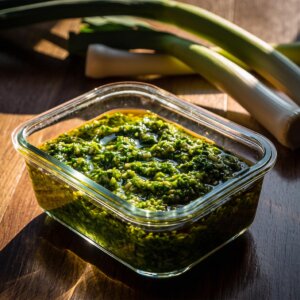
Pesto, as we know, is a quick recipe with a thousand uses. You can use it for first courses, on crostoni and bruschetta, or as a delicious garnish for a dish. In this recipe we will use the green part of the leeks as a base. Simply take the leaves and after washing them, blend them with almonds or walnuts, extra virgin oil, a pinch of salt and some Parmigiano Reggiano. A pesto with a unique flavor.
An original and sustainable idea: blend green leaves with almonds or walnuts, extra virgin oil, a pinch of salt and parmesan cheese. You will get a pesto with a unique flavor, perfect for seasoning pasta, cereals or bruschetta..
-
Baked leek rolls
A tasty and original way to use the green part of the leek? This recipe!
Blanch the leaves for a few minutes, so that they are softer and more flexible. Boil the potatoes, they will be used for filling. Once ready, mash them together with some cheese (stracchino or scamorza) and a pinch of pepper. Place a spoonful of filling on each leaf, roll up and close with a toothpick. Arrange the rolls on a baking tray with baking paper, brush them with a drizzle of oil and bake at 200° for 10-12 minutes.
Golden rolls, tasty and perfect as an appetizer or side dish without waste!
Special tip: vegetable waste broth
If you want to take an extra step toward the Zero Waste philosophy, you can collect all vegetable peels, stems and leaves which you would normally throw away and use to make an aromatic broth. Add a little’ salt, boil, and then strain: you'll get a ready-made base to use in many recipes, avoiding waste and adding flavor to your dishes.

Discover more ideas Zero wastes And all of our Bontà di Stagiones:
- Don't throw away the stems of the black cabbage: prepares this delicious recipe and durable.
- Discover all Zero Waste recipes by Bontà di Stagione.
- Have you tried our Rice, Potatoes and Leeks?
- Try also the Onion Soup Gratin “La Parisienne”, a special recipe with an authentic taste.
 Italian
  English
  Czech
Czech